The CATPC Collection
International artists join CATPC in restoring the Sacred Forest in D.R. Congo
The CATPC Collection is the first international art collection collectively owned by a community of plantation workers. Based in Lusanga, Democratic Republic of Congo, the collection brings together works by artists from around the world and connects their cultural and economic value to CATPC’s ongoing work to reclaim and reforest former plantation land.
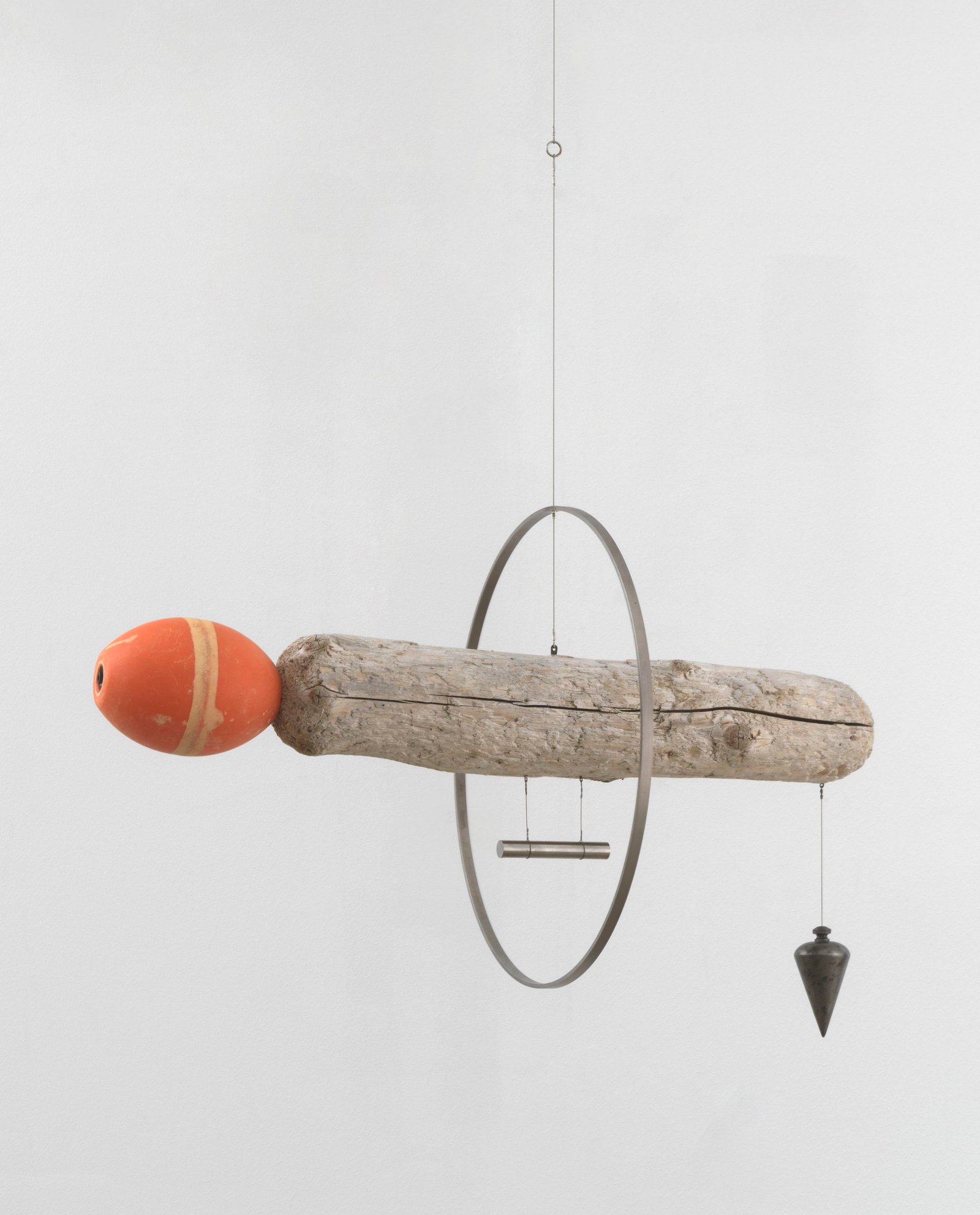
Shore compass (10:00, orange), Driftwood, plastic, stainless steel, magnet, wire, 49 x 68 x 34 cm, Photo: Jens Ziehe © 2018 Olafur Eliasson
The inaugural collection includes works by Francis Alÿs, Ai Weiwei, Jan Dibbets, Marlene Dumas, Olafur Eliasson, Sandra Mujinga, Lydia Ourahmane, Chéri Samba, Christopher Kulendran Thomas and Luc Tuymans. Each year, new artists will be invited to contribute to the collection.
The collection remains in the collective ownership of CATPC and will have its permanent home at CATPC’s White Cube in Lusanga, designed by OMA.
From art to land
For more than a decade, CATPC has used the proceeds from its art to buy back former plantation land in Lusanga. Approximately 400 hectares have now been reclaimed and are being reforested and cultivated through regenerative agriculture.
The CATPC Collection extends this approach: artists from around the world contribute works to a collection collectively owned by CATPC, connecting the value and visibility of international art to the continued reclamation and reforestation of the land.
“Until now, our own art has helped us to reforest the land; now artists from across the world are joining us. The Sacred Forest will be one big collective work, co-authored by all these artists.”
— Ced’art Tamasala and Matthieu Kasiama, CATPC
Reversing the flow of value
The collection proposes a reversal of a historical relationship. Wealth generated through plantation labour in Congo and elsewhere contributed to the accumulation of capital and the development of cultural institutions and collections in Europe, while the communities producing that wealth were left with depleted land and little control over the value they generated.
CATPC is now building and owning a collection of its own. The works in the CATPC Collection are not intended for private circulation or sale. They form a permanent collection held collectively in Lusanga. Their cultural and economic value strengthens CATPC’s ability to continue reclaiming and restoring former plantation land.
The collection is therefore not simply about bringing international art to Lusanga. It changes the direction in which cultural value moves, connecting the international art world to the reforestation of the land from which CATPC’s history cannot be separated.
As Marlene Dumas says of her contribution to the collection:
“We can no longer undo Lumumba’s murder, nor can we erase the sins of our fathers, but it is wonderful that works of art can now help to restore the forest.”
A collection for a forest
At the centre of CATPC’s work is the return of the forest. Approximately 400 hectares have already been bought back through the proceeds of CATPC’s artistic practice. Former plantation land is being restored through reforestation and regenerative agriculture. For CATPC, the return of the forest represents not only ecological recovery, but also the recovery of a cultural and spiritual landscape profoundly altered by plantation monoculture.
The relationship between the collection and this process is visualised in a large-scale drawing by CATPC artist Ced’art Tamasala. The work maps connections between the CATPC Collection, the international art world, histories of extraction and the forest returning in Lusanga.
Each work entering the collection becomes part of this larger process: art held in common, connected to land held and restored by the community.
“Once these works enter the CATPC Collection, they become part of something bigger, something held in common, owned by our community and connected to the land we are reforesting. Our movement has always been about creating another way of living and working together, and today we are finding solidarity among artists across the world. This collection makes that solidarity tangible, and gives us another way to work together towards the future of the planet.”
— Ced’art Tamasala and Matthieu Kasiama, CATPC
The CATPC Collection is supported by Human Activities in Amsterdam.